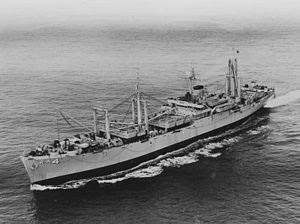
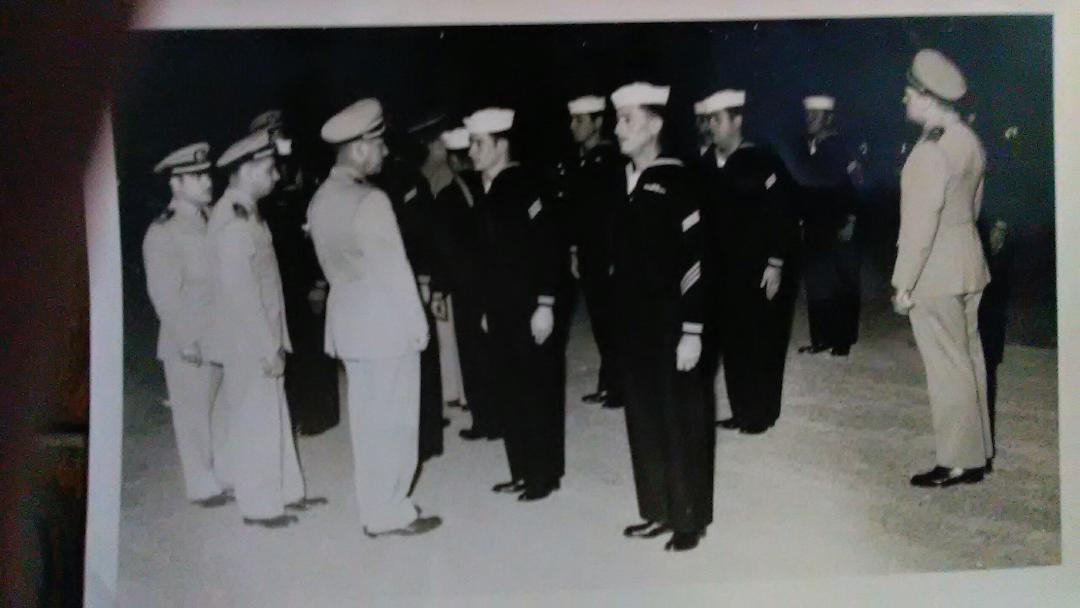
In November 2020, American Legion Post 2001 organized a Veterans Day essay and photo competition. We are pleased to announce our winner, J. Gilberto Quezada. Rather than describe Mr. Quezada we have included his letter and photo submissions for your reading pleasure. Great job, and we appreciate the insightful (and moving) perspective!
—
A Salute To My Father
On Veterans Day, this coming Wednesday, November 11, 2020, I would be remiss if I did not pay tribute to my father Pedro Quezada. He served in World War II in the U.S. Navy and saw action in the Pacific theater aboard the U.S.S. Electra. He was honorably discharged as a Seaman First Class on December 7, 1945. He left me some mementos that he brought back from the war. Among the items are a Japanese helmet with an inscription on the inside and a bullet hole on the right side, some Japanese grenades, a Japanese canteen, and some bullets and the bottom shells of bombs. Afterwards, he joined the U.S. Naval Reserve in Laredo, Texas and retired as a Petty Officer First Class in 1972. My dad passed away in 1997, at the age of 87.
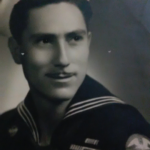
From the family personal papers, I found out that on Thursday, April 20, 1944, my father reported for active duty by going to boot camp, as an Apprentice Seaman, at the United States Naval Training Center, located at the northern end of San Diego Bay, California. He did his basic training aboard the USS Electra (AKA 4). It was almost two months after he was in the Navy when American, British, and Canadian forces landed along a fifty mile stretch on the beaches of Normandy, France on Tuesday, June 6, 1944. This day became known as D-Day.
At the end of boot camp or the training period, which lasted from three to six weeks, my dad was promoted from Apprentice Seaman to Seaman 2nd Class, and was assigned to the USS Electra (AKA 4). This promotion meant an increase in his monthly pay from $50 to $54 dollars. His commanding officer was Commander Charles Sprague Beightler. Information culled from my own research revealed that the ship was launched in 1941, and that it was an Arcturus-class attack cargo vessel, meaning that it was made to carry combat loaded freight. And, its landing craft was designed to land weapons, supplies, and even soldiers on enemy shores. Moreover, the ship carried one single, five inch, 38 caliber dual purpose gun mount; four twin, 3 inch, 76mm, AA gun mounts; and eighteen single 20mm AA gun mounts. It was also classified as a heavy cruiser U.S. Warship.

My dad remained aboard the USS Electra (AKA 4) for about three more months, bringing soldiers back to the United States by way of San Francisco and San Diego, until his honorable discharge, as a Seaman 1st Class, from the United States Navy at the USN Personnel Separation Center in Camp Wallace, Texas, on Friday, December 7, 1945. Camp Wallace was located in Galveston County, south of the city of Houston and close to the Texas Gulf Coast.
He was my role model in terms of getting ahead in life by hard work, striving for excellence in whatever endeavor I was pursuing, and persevering to achieve my goals. I do miss him and I will never forgot his influence on me. He will always be in my thoughts and prayers.
I am very proud to state that my dad was one of millions of American soldiers who fought valiantly to prevent evil from prevailing and spreading. It was only when “Taps” was being played at his funeral at Fort Sam Houston National Cemetery, on that cloudy, rainy, and mournful Tuesday afternoon, April 1, 1997, that an overwhelming sense of indebtedness and gratitude engulfed me for the courage and sacrifice he and men and women of his generation made so that we could continue to enjoy our freedom. They all, indeed, belonged to the Greatest Generation. In honor of all the veterans on this special day, and especially my dad, I proudly salute you.
J. Gilberto Quezada
[J. Gilberto Quezada is a retired educator of thirty-one years with the South San Antonio ISD. He is the author of the award-winning political biography, Border Boss: Manuel B. Bravo and Zapata County, besides being a writer, essayist, and poet.]